FTTH Access Network
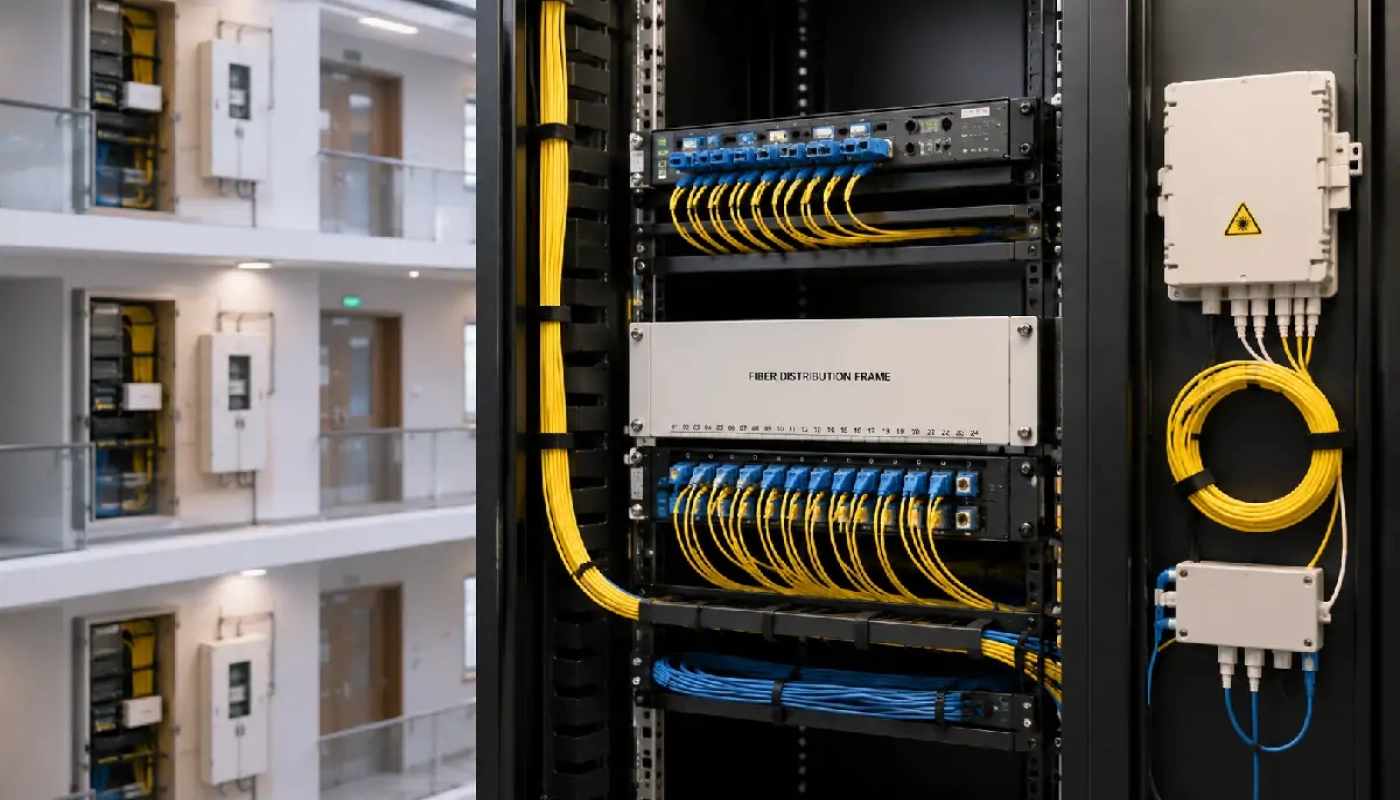
Plan fiber access from outside-plant distribution to splitting, termination and subscriber connections using cables, splitters, distribution hardware and fiber connectivity.
Explore fiber optic solutions for FTTH access, data centers, building and campus networks, outside plant deployment, FTTA sites, and utility fiber infrastructure.
The same fiber products are used differently across access, data center, campus, outside-plant, radio-site and utility networks. Start with the deployment environment, then move into the cable, distribution and connectivity choices that fit the project.
Plan fiber access from outside-plant distribution to splitting, termination and subscriber connections using cables, splitters, distribution hardware and fiber connectivity.
Plan high-density data center fiber links with MPO/MTP cabling, patching, distribution hardware, fiber connectivity and optical transceiver connections.
Plan fiber backbone and distribution routes across buildings, equipment rooms and campus networks using suitable cables, termination hardware and connectivity products.
Plan aerial, duct, buried and other outside-plant fiber routes with suitable outdoor cables, splice protection, distribution hardware and connection products.
Plan fiber connections between baseband, tower and radio-side equipment using outdoor fiber assemblies, rugged connectivity and related cabling for FTTA deployment.
Plan fiber communication routes for utility and power infrastructure using ADSS, OPGW and related fiber cabling, connectivity and distribution products.
Different network environments change what should be decided first. Use the comparison below to identify the main design focus before moving into individual products and configurations.
Plan subscriber access, split path and drop connection for last-mile fiber deployment.
Support dense equipment rows, optical interfaces and migration planning inside data halls.
Organize backbone routes, termination points and distribution between rooms or buildings.
Match outdoor routes with the protection, splicing and field access conditions required on site.
Connect tower equipment with rugged outdoor assemblies and reliable site-side interfaces.
Plan long-span utility routes with the protection and infrastructure fit needed for power environments.
Start with the environment and route, then confirm capacity, interfaces and the project details needed to narrow the final product direction.
Identify the building, outside-plant, data-center, tower-site or utility conditions that shape the network path.
Confirm distance, fiber count, density, split points and the places where fiber must be distributed or protected.
Match cables, connectors, patching, enclosures, splitters and optical interfaces to the equipment and layout.
Use drawings, equipment interfaces, quantities and reference specifications to narrow the configuration.

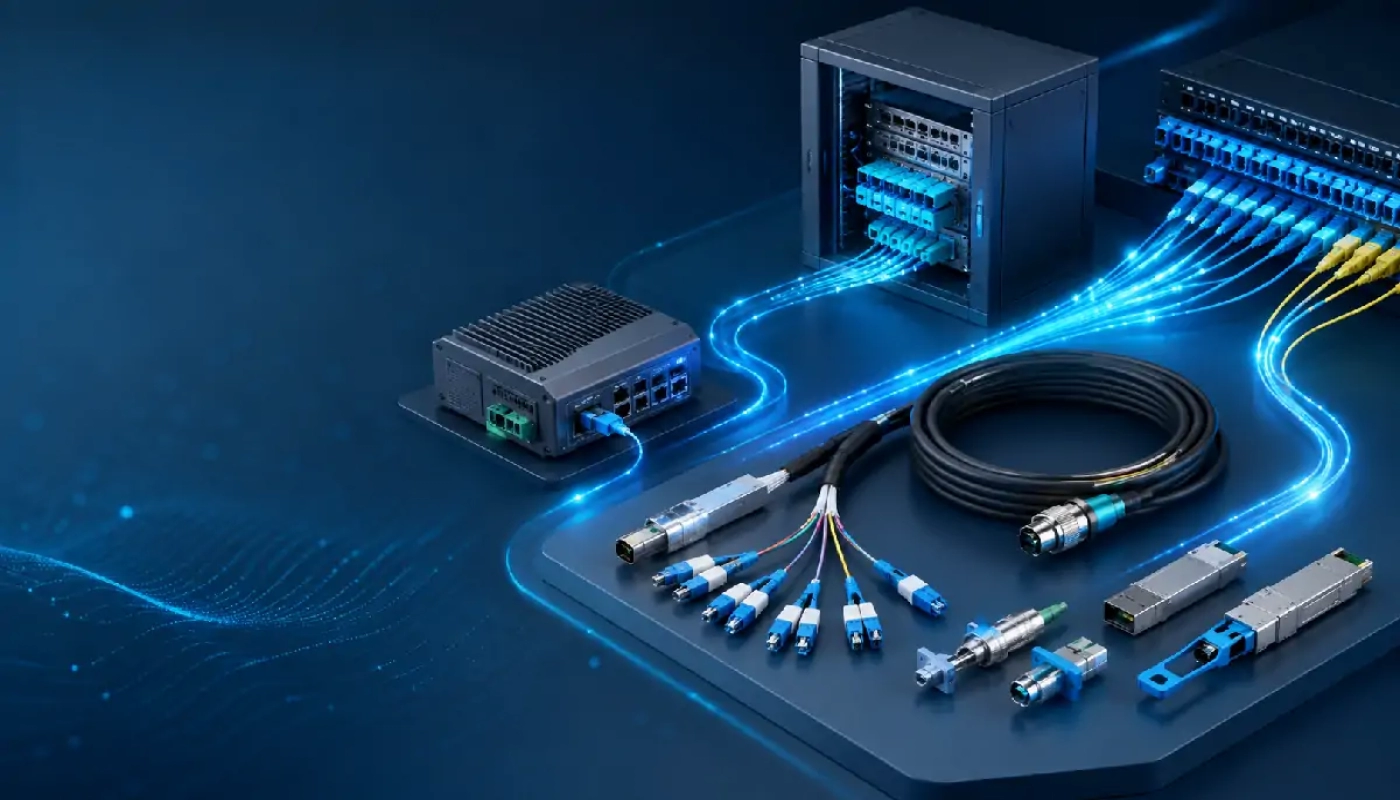
Solutions combine product families according to the route, distribution point, interface and operating environment. The product catalog provides the individual components after the network direction is clear.
Optical transceivers enable bidirectional conversion between optical and electrical signals for fiber transmission. Ranging from 100G to 800G, these pluggable modules come in SFP, QSFP-DD and OSFP form factors. They support short-reach to long-haul transmission over single-mode and multimode fiber, offering stable high-density connectivity with custom compatibility and OEM options.
Product FamilyFiber Optic Cables deliver consistent high-speed transmission for telecom, utility and specialist networks. Indoor variants support building backbones and equipment room cabling. Loose-tube and armored cables withstand outdoor conditions for aerial, duct and direct-burial deployment. Multiple fiber counts and structures fit varied site conditions, with custom builds available for unique project demands.
Product FamilyWe provide premium fiber connectivity components, including patch cords, pigtails, MPO/MTP assemblies, adapters, connectors and attenuators. Strict production control ensures ultra-low insertion loss and high return loss. The components preserve clean optical signals and hold steady performance after numerous insertions and removals. Multiple connector and fiber variants are supported. Custom lengths and interface options are available to match diverse technical specifications.
Product FamilyFiber distribution hardware supports fiber termination, splice containment and structured cable management. Heavy-duty housings guard fiber components against mechanical stress. Modular architecture enables orderly fiber routing. Multiple mounting styles and port-capacity options accommodate different optical system configurations.
Product FamilyFiber splitters achieve optical signal division in fiber transmission systems. Balanced power distribution is maintained across all output ports. Optimized optical structure brings low insertion loss and high isolation. Signal attenuation and crosstalk are effectively controlled. Stable optical characteristics are preserved over the full operating wavelength range.