Product Overview
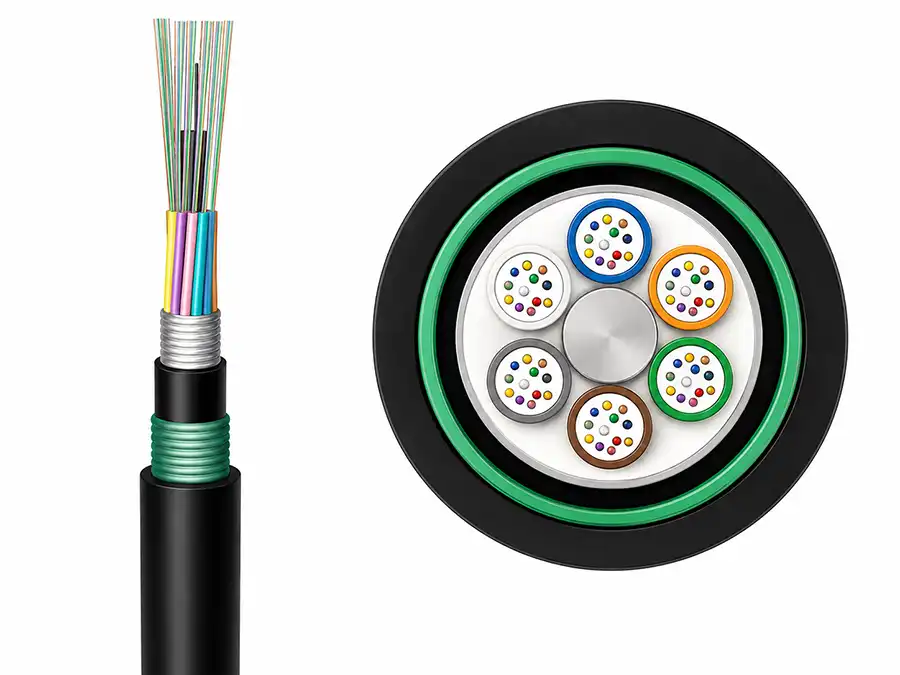
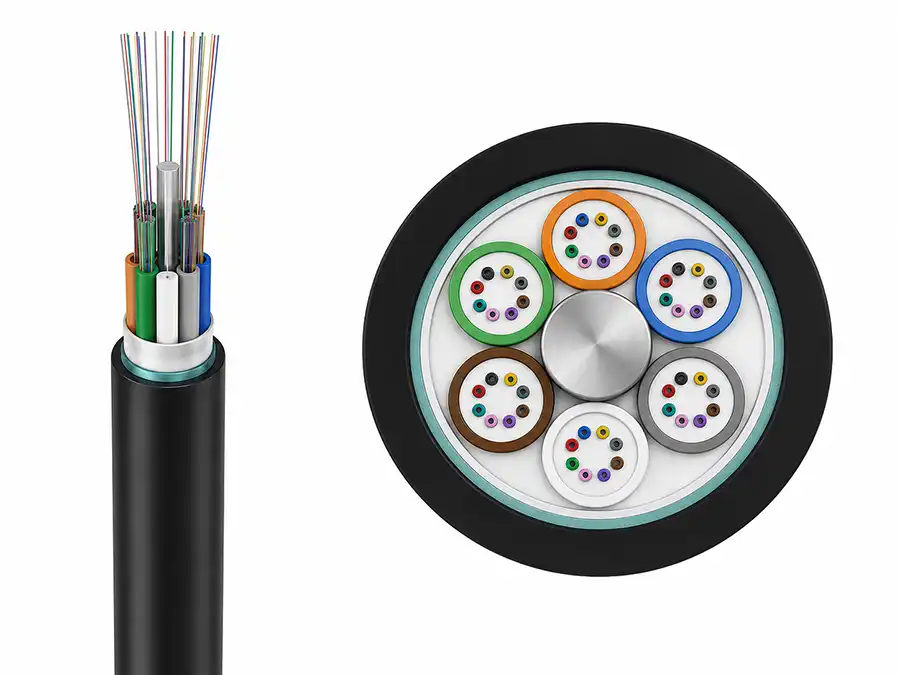
GYTA is an outdoor stranded loose tube fiber optic cable with an aluminum-polyethylene laminate moisture barrier and a black PE outer sheath. It is designed for duct, conduit and supported outdoor backbone routes requiring reliable moisture protection and stable mechanical performance.
Construction: Stranded loose tube
Moisture barrier: APL aluminum-polyethylene laminate
Reference fiber count: 4–144 fibers
Outer sheath: Black polyethylene
Temperature range: -40°C to +70°C
Product Overview
What Is a GYTA Fiber Optic Cable?
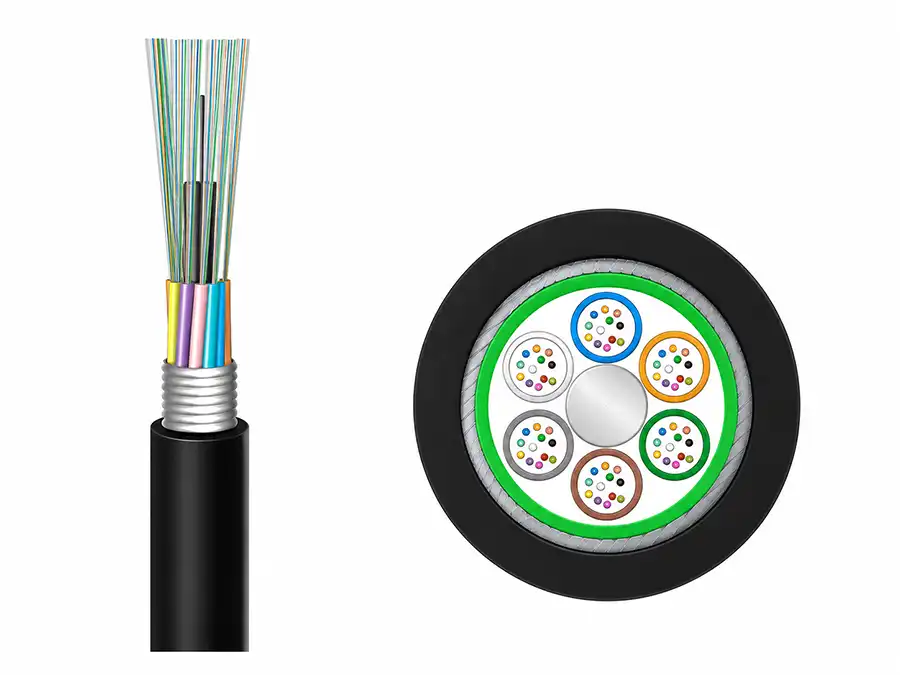
GYTA is a stranded loose tube outdoor optical cable in which 250 μm optical fibers are placed inside high-modulus plastic loose tubes. The tubes are filled with water-blocking compound and stranded around a metallic central strength member to form a compact circular cable core.
Water-blocking materials fill the cable-core interstices to limit longitudinal moisture migration. An aluminum-polyethylene laminate, commonly abbreviated as APL, is applied around the cable core before the black polyethylene outer sheath is extruded.
The APL layer acts as a continuous moisture barrier while keeping the cable lighter than a comparable corrugated steel-tape-armored construction. GYTA is therefore commonly considered for outdoor duct, conduit and lashed aerial routes where moisture resistance, manageable cable weight and reliable mechanical performance are required.
Cable Construction
GYTA Cable Structure
01 Optical Fibers
250 μm optical fibers selected according to the required transmission system, link distance and network specification.
02 Gel-Filled Loose Tubes
High-modulus plastic tubes contain the optical fibers and filling compound, helping isolate the fibers from mechanical and temperature-related stress.
03 Central Strength Member
A metallic strength member supports the stranded cable core. A PE coating may be applied around the strength member in certain high-fiber-count configurations.
04 Stranded Cable Core
Loose tubes and filler elements are stranded around the central strength member to maintain a compact and circular cable structure.
05 Water Blocking
Water-blocking compound and core-filling materials help reduce longitudinal moisture migration inside the cable.
06 APL Moisture Barrier
An aluminum-polyethylene laminate is applied around the cable core to provide a continuous moisture barrier beneath the outer sheath.
07 PE Outer Sheath
A black polyethylene outer sheath protects the cable against outdoor weather, moisture and normal installation handling.
Product Benefits
GYTA Cable Features
Stranded loose tube construction protects fibers against longitudinal stress.
High-modulus loose tube material provides strength and hydrolysis resistance.
Tube filling compound provides additional protection around the optical fibers.
Compact cable-core design helps maintain stable tube position and cable geometry.
APL moisture barrier supports reliable performance in outdoor duct environments.
Lower reference cable weight than the corresponding GYTS steel-tape construction.
Black PE outer sheath provides outdoor environmental and UV protection.
Fiber type, fiber count, jacket marking, reel length and packing can be reviewed for OEM orders.
Network Applications
Where Is GYTA Cable Used?
Outdoor Duct Networks
GYTA can be installed in suitable underground or above-ground ducts where the cable is protected by the conduit route.
Telecom Backbone Routes
The stranded loose tube structure supports metropolitan, access and outdoor telecom backbone connections.
Campus and Industrial Networks
GYTA can connect communication rooms, buildings, cabinets and distribution points across protected outdoor routes.
Lashed Aerial Installation
The cable may be lashed to an approved messenger wire where the supporting method, tensile load and environmental conditions have been confirmed.
Standard GYTA is not a self-supporting aerial cable. Direct-burial suitability should not be assumed from the GYTA model name alone. Projects requiring increased burial and mechanical protection may need a double-sheath construction such as GYTA53.
Reference Data
GYTA Fiber Optic Cable Specifications
| Fiber Count | Loose Tubes | Fillers | Reference Weight kg/km | Long-Term Tensile N | Short-Term Tensile N | Long-Term Crush N/100 mm | Short-Term Crush N/100 mm | Static Bend Radius | Dynamic Bend Radius |
|---|---|---|---|---|---|---|---|---|---|
| 4 | 1 | 4 | 76 | 600 | 1500 | 300 | 1000 | 10D | 20D |
| 12 | 2 | 3 | 76 | 600 | 1500 | 300 | 1000 | 10D | 20D |
| 24 | 4 | 1 | 76 | 600 | 1500 | 300 | 1000 | 10D | 20D |
| 48 | 4 | 1 | 90 | 600 | 1500 | 300 | 1000 | 10D | 20D |
| 96 | 8 | 0 | 136 | 600 | 1500 | 300 | 1000 | 10D | 20D |
| 144 | 12 | 0 | 190 | 600 | 1500 | 300 | 1000 | 10D | 20D |
D represents the nominal cable diameter. These are reference configurations based on the available product data. Final cable diameter, weight, tube arrangement and mechanical performance must be confirmed against the approved manufacturing specification.
Available Options
GYTA Cable Configuration Options
Inspection
GYTA Cable Testing and Quality Control
The inspection plan should be defined according to the approved cable specification and order requirements. Available checks may include:
Optical attenuation at the specified wavelengths
Fiber and loose-tube color sequence
Cable outside diameter and construction verification
APL application and overlap inspection
Outer-sheath thickness, appearance and marking
Cable length and reel-length verification
Tensile and crush performance testing
Bending and temperature-cycle testing
Water-penetration testing where specified
Packaging, drum and shipping-mark inspection
Applicable requirements can be reviewed with reference to YD/T 901 and the relevant IEC 60794 series test methods. The exact standard edition, test scope and compliance documentation must be confirmed for the ordered cable.
Quotation Preparation
Information Required for a GYTA Cable Quote
Send the available project information so the cable construction and quotation scope can be reviewed accurately:
Installation route: duct, conduit or supported aerial route
Required optical fiber type and fiber count
Required cable diameter or existing cable reference
Length per drum and total order length
Tensile, crush, bending and temperature requirements
Jacket printing, sequential marking and label requirements
Testing, certification and documentation requirements
Packing method, destination and required delivery date
Frequently Asked Questions
GYTA Fiber Optic Cable FAQs
What does GYTA mean in fiber optic cable?
GYTA identifies an outdoor stranded loose tube optical cable using an aluminum-polyethylene laminate moisture barrier and a polyethylene outer sheath.
What is the difference between GYTA and GYTS cable?
GYTA uses an aluminum-polyethylene laminate moisture barrier and is generally lighter. GYTS uses corrugated steel tape and provides increased crush and mechanical protection.
Can GYTA cable be directly buried?
Direct-burial suitability depends on the complete cable construction and installation environment. A double-sheath armored cable such as GYTA53 may be more appropriate where greater burial protection is required.
Can GYTA be installed overhead?
GYTA is not self-supporting. It may be used in an approved lashed aerial system with an external messenger, subject to the route, supporting method, tensile load and environmental conditions.
Which fiber counts are available?
Reference configurations include 4, 12, 24, 48, 96 and 144 fibers. Other fiber counts can be reviewed according to the required loose-tube arrangement.
Can the fiber type and cable marking be customized?
Yes. Fiber type, fiber count, jacket marking, reel length, labels and packing can be reviewed according to the project quantity and approved specification.
Project Review
Request a GYTA Cable Configuration and Quote
Share the fiber count, installation route, required drum length, total quantity, testing scope and delivery destination. A cable marking, photograph, drawing or existing specification can be used as the starting reference.