
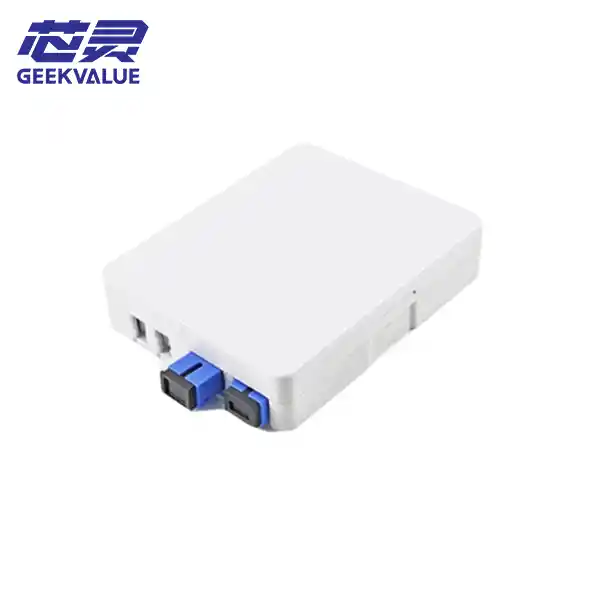
Product Overview
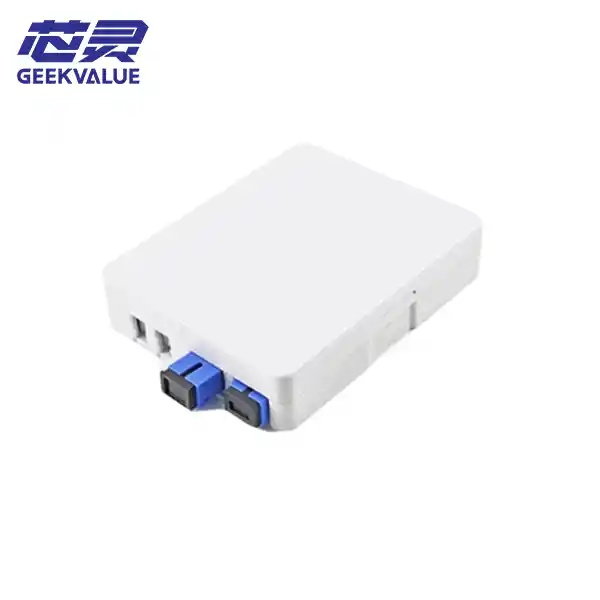 A fiber optic desk box, also commonly known as a fiber optic information panel or a Type 86 fiber optic panel, is a key interface device located at the end user's end in a Fiber to the Home (FTTH) or Fiber to the Desktop (FTTD) project.
If you compare the entire fiber optic network to an information highway, then the fiber optic desk box is like the "exit tollbooth" at your home or office. It is one of the few devices in the entire cabling system that is directly exposed and in contact with the user.
Core Functions: The core function of the fiber optic desk box is to complete the final step of optical signal transfer from the "external cable" to the "terminal device":
Fiber Optic Access and Port Output: It provides a standard physical interface, converting the incoming fiber optic cable (such as a drop cable) into a standard device interface (such as SC or LC ports). You can easily connect your computer, router, or optical modem (ONU) to the fiber optic network by plugging a patch cord into this box.
Securation and Protection: It securely secures the incoming fiber optic cable and provides safe space for bending and coiling of the fiber, protecting the fragile fiber from damage.
Fiber Optic Splicing: The internal space supports fiber optic fusion splicing or cold splicing, providing an operational platform for on-site construction.
Redundancy Management: Provides space for coiling and storing a small amount of excess drop cable, ensuring neat cabling.
Structure and Classification: Fiber optic desktop boxes typically consist of a front cover and a back box. They are mainly classified as follows:
By Installation Method:
* Surface Mount: Directly installed on the wall surface; relatively thin, typically 20mm.
* Recessed Mount: Embedded in the wall, used with a standard 86-type back box; relatively thick, typically 40mm.
By Number of Ports: Commonly available are single-port, dual-port, and quad-port, allowing connection of multiple devices as needed.
By Adapter Type: Supports installation of various standard fiber optic connectors such as SC, LC, FC, and ST.
Key Specifications and Performance:
* Standard Size: The most common is the 86-type, with a panel size of 86mm × 86mm. Some products also use a 86×120mm specification.
Material: The main body is typically made of high-quality PC (polycarbonate) or flame-retardant ABS plastic, possessing excellent fire resistance, with a flame retardant rating up to V0.
Performance Specifications:
Insertion Loss: Average insertion loss is typically below 0.5dB, with high-quality products reaching 0.3dB.
Return Loss: PC endface ≥45dB, APC endface ≥60dB.
Operating Temperature: Adaptable to a wide temperature range, typically -40℃ to +65℃.
Application Scenarios: Fiber optic desktop boxes are crucial equipment for the "last mile" of fiber optic access, with a wide range of applications:
* Fiber to the Home (FTTH): Installed in the user's home, connecting the incoming fiber optic cable to the optical modem (ONU).
Fiber to the Office (FTTO): Provides employees with high-speed fiber optic network access in corporate offices.
Fiber to the Desktop (FTTD): In research, design, and other work scenarios requiring extremely high bandwidth, directly extends fiber optic cable to the user's desktop.
Other Scenarios: Also commonly used in corridors, base stations, data centers, and other environments.
How to Choose? When selecting a fiber optic desktop box, consider the following:
Determine the installation method: Choose surface mounting or recessed mounting based on site conditions.
Determine the number of ports: Choose single-port, dual-port, or multi-port ports based on the number of devices you need to connect.
Determine the adapter type: Confirm whether your fiber optic patch cord interface is SC, LC, or another type, and select a matching desktop box.
Pay attention to materials and standards: Prioritize products that comply with RoHS environmental standards and have high flame retardant ratings.
In summary, although a fiber optic desktop box may seem like a small, inconspicuous component, it is a crucial bridge between the fiber optic network and the end user. It ensures the convenience, reliability, and aesthetics of fiber optic access and is an indispensable basic device for applications such as fiber to the home and fiber to the desktop.