
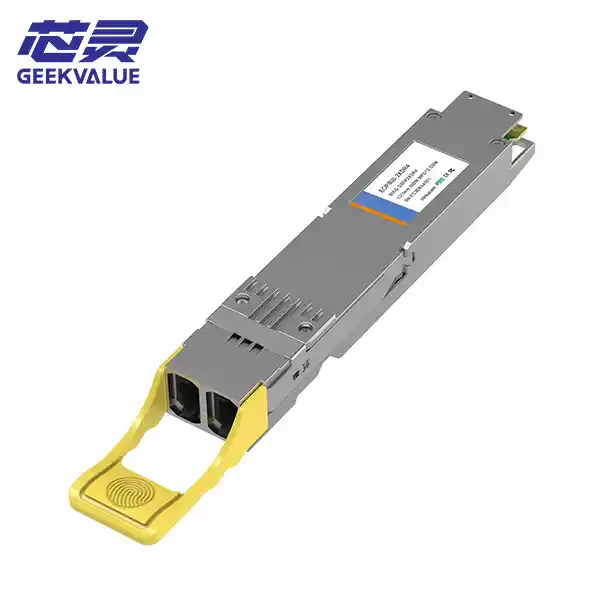
Product Overview
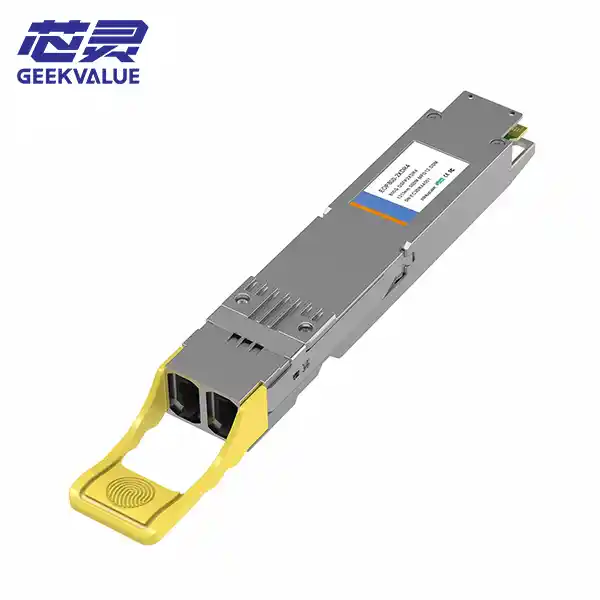 An 800G optical module is a high-speed optical communication module supporting a data transmission rate of 800 gigabits per second (800Gbps). As an upgrade to the 400G optical module, it primarily performs the conversion between electrical and optical signals, serving as a core "bridge" connecting AI computing clusters, data centers, and high-speed networks.
Core Technology: How to Achieve 800G High Speed?
PAM4 Modulation Technology: This is the key technology for achieving high-speed transmission in 800G optical modules. It carries 2 bits of information by transmitting four different signal levels (00, 01, 10, 11) within one signal cycle, doubling the data transmission rate under the same bandwidth compared to traditional NRZ technology.
Mainstream Architectures: There are two main implementation architectures for 800G optical modules:
8×100G PAM4 Architecture: This uses eight optical channels, each transmitting 100Gbps of data, aggregated to achieve a total bandwidth of 800G.
4×200G PAM4 Architecture: This uses four optical channels, each transmitting 200Gbps of data.
Core Chip: The module integrates an advanced DSP (Digital Signal Processor) chip to process high-speed PAM4 signals, optimizing transmission quality.
Advanced Integration Technology: To reduce power consumption and cost, the industry is widely adopting silicon photonics integration technology, integrating key optical components such as lasers and modulators onto a single silicon chip.
Mainstream Packaging: QSFP-DD and OSFP
800G optical modules mainly come in two industry-standard packaging forms:
Features: QSFP-DD800 OSFP
Size: Smaller (18×89.5mm) Larger (20×107mm)
Advantages: High-density deployment, compatible with existing 400G switch architecture; Stronger heat dissipation capacity, suitable for high-power scenarios
Application Scenarios: Data center leaf-spine networks, existing network upgrades, AI training clusters, supercomputing centers, new liquid-cooled data centers
Cost: Relatively low Relatively high
Upgrade Path: Current mainstream; 1.6T upgrade space reserved
Selection Recommendation: For existing network upgrades, QSFP-DD800 is a good choice; for new AI or liquid-cooled clusters, OSFP has advantages in heat dissipation and future upgrades.
Application Scenarios: AI and Data Centers as the "Information Superhighway"
AI Computing Clusters: Providing ultra-high-speed, low-latency data interconnection for GPU servers and switches in large-scale AI model training. For example, NVIDIA's DGX GH200 supercomputer is equipped with 1920 800G optical modules.
Data Center Interconnect (DCI): Connecting different data centers to achieve high-speed data transmission and disaster recovery. 800G DR8 supports connections of ≤500 meters, while 800G LR4 supports cross-campus interconnection over 10 kilometers.
Cloud Data Centers and 5G Networks: Upgrading the core network of cloud data centers and supporting the infrastructure of 5G communication networks.
Market Status: Explosive Demand, Rising Chinese Power
Demand Explosion: AI computing power demand is the main driving force. Global demand for 800G optical modules is expected to exceed 18 million units by 2025, a year-on-year surge of 120%.
Chinese Power: Chinese companies have become a significant force in the global market. Chinese manufacturers hold over 42% of the global 800G optical module market share, with companies like InnoLight Technology, Eoptolink, Accelink Technologies, and HGTECH being major players.
Future Trends: The industry is evolving towards 1.6T and higher speeds, while new technologies such as CPO (co-packaged optics) are under development, aiming to further reduce power consumption.