
Product Overview
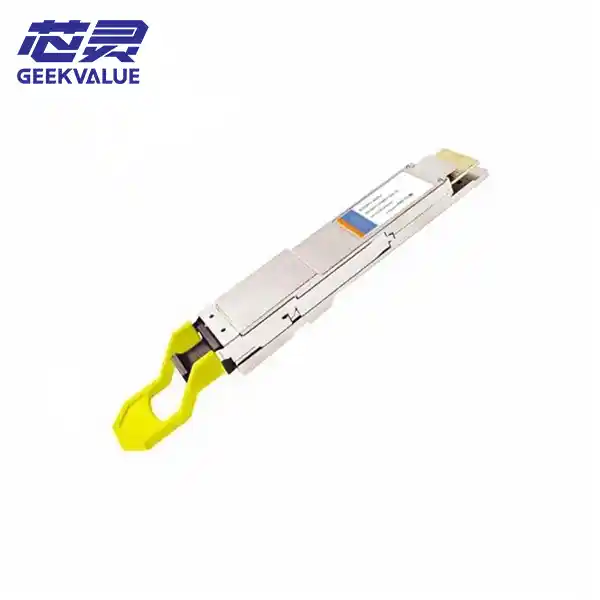
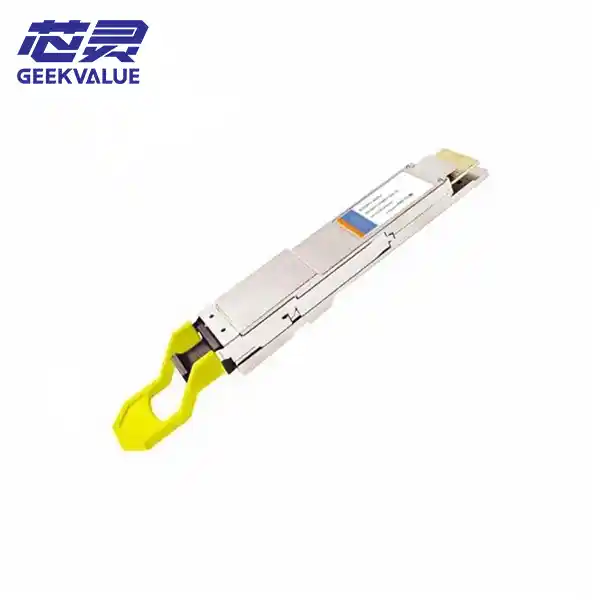 A 400G optical module is a high-speed, pluggable optical transceiver module supporting 400 Gigabit Ethernet (400GbE) rates. It achieves high-speed data transmission over optical fiber by converting electrical signals to optical signals at the transmitting end and vice versa at the receiving end. As a core component of modern data centers and AI computing clusters, it provides crucial high-speed interconnect capabilities.
Core Technology: How to Achieve 400G High Speed?
PAM4 Modulation Technology: This is the core technology for achieving 400G high-speed transmission. It carries 2 bits of information by transmitting four different signal levels within one signal cycle, doubling the data transmission rate without increasing bandwidth compared to traditional NRZ technology.
DSP Chip: PAM4 technology sacrifices signal-to-noise ratio, therefore, the module integrates an advanced digital signal processor (DSP) chip to compensate for signal impairments, restore the clock, and ensure the reliability of long-distance transmission.
Mainstream Packaging: Determining Compatibility and Power Consumption
The packaging form determines the module's physical size, power consumption, port density, and compatibility, and is the primary consideration during selection.
Features: QSFP-DD, OSFP, QSFP112
Full Name: Quad Small Form-factor Pluggable - Double Density Octal Small Form-factor Pluggable, Quad Small Form-factor Pluggable - 112
Core Advantages: Good backward compatibility, compatible with QSFP28 (100G) modules; Strong heat dissipation, supporting higher power consumption; High energy efficiency, power consumption controlled below 10W
Power Consumption Limit: Typically ≤ 12W, Typically ≤ 15W, Typically ≤ 10W
Market Position: Mainstream market, approximately 70% of 400G deployments use this package; Increasing market share in hyperscale data centers and telecom-grade scenarios; A rising star, gaining market attention for its high energy efficiency.
In addition, there are earlier package standards such as CFP8, but due to their larger size and lower port density, they have been gradually replaced.
Main Types and Standards: Selection by Distance
400G optical modules have various interface standards depending on the transmission distance.
SR (Short Range): Short-distance, using multimode fiber, suitable for rack-to-rack (TOR switch) connections. Representative standard: 400G-SR8 (supports 100 meters).
DR (Data Center Reach): Medium-distance, using single-mode fiber, suitable for rack-to-rack interconnection within data centers. Representative standard: 400G-DR4 (supports 500 meters).
FR (Four Wavelength): Medium to long-distance, using single-mode fiber and four wavelengths multiplexed, suitable for campus or building-to-building connections. Representative standard: 400G-FR4 (supports 2 kilometers).
LR (Long Range): Long-distance, using single-mode fiber, suitable for metropolitan area network (MAN) connections. Representative standard: 400G-LR4 (supports 10 kilometers).
ZR: Ultra-long-distance, using coherent optical technology, suitable for metropolitan and regional networks exceeding 80 kilometers.
Application Scenarios: AI Computing Clusters: Large-scale AI model training requires ultra-high-speed, low-latency data interconnection between GPU servers and switches.
Data Center Interconnect: Networks used to connect data centers within a single data center (Spine-Leaf architecture) or between different data centers (DCI).
Cloud Computing and 5G Transport: Infrastructure supporting large-scale cloud computing networks and 5G core and transport networks.
Market Status and Future Trends
Market Maturity and Scale: Since mass production began in 2019, 400G optical modules have achieved significant technological maturity and a complete ecosystem. They remain a mainstream choice, especially in standard cloud computing and enterprise deployments. The global market size for 400G optical modules is projected to reach 52.2 billion yuan by 2025.
Demand-Driven: The explosive growth of AI computing power is the primary driving force. It is estimated that by 2027, the global demand for 400G and above optical modules in the AI data communication field will approach 155 million units, with a market size exceeding 70 billion US dollars.
Future Evolution: The industry is rapidly evolving towards higher speeds of 800G and 1.6T. Simultaneously, low-power technologies such as LPO (Linear Pluggable Optics) are gradually being implemented.
In conclusion, 400G optical modules have become a core component in the construction of high-speed networks. When selecting one, factors such as actual distance requirements, equipment compatibility, power consumption budget, and cost must be considered comprehensively.